Enterprise Solutions: Powering Business Growth Through Digital Transformation
In today’s competitive business environment, organisations need more than standalone software—they need integrated enterprise solutions that connect people, processes, and data. As businesses expand, managing operations through spreadsheets and disconnected applications becomes increasingly difficult, leading to inefficiencies, delays, and costly errors.
Enterprise solutions help businesses overcome these challenges by bringing every critical function together into a single, intelligent platform.
What Is an Enterprise Solution?
An Enterprise Solution is a comprehensive software system designed to manage and automate core business operations across multiple departments. Instead of using separate applications for accounting, inventory, human resources, sales, production, and customer management, an enterprise solution centralises everything into one unified system.
This enables organisations to improve collaboration, increase productivity, and make informed decisions based on real-time data.
Why Businesses Need Enterprise Solutions
As companies grow, operational complexity increases. Multiple teams, departments, and locations generate large volumes of information every day. Without a connected system, businesses often face:
- Duplicate data entry
- Manual and repetitive processes
- Communication gaps between departments
- Delayed reporting
- Inventory inaccuracies
- Payroll and accounting errors
- Limited business visibility
- Slow decision-making
Enterprise solutions eliminate these challenges by creating a single source of truth for the entire organisation.
Key Components of an Enterprise Solution
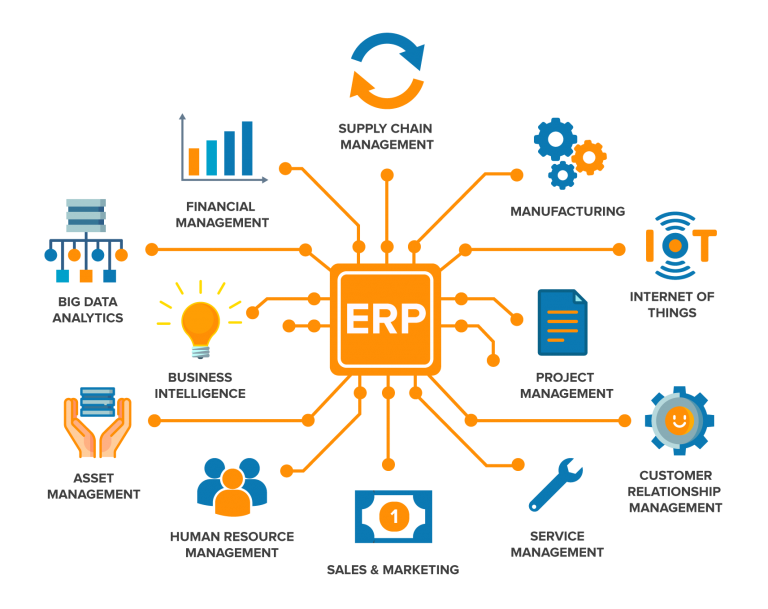
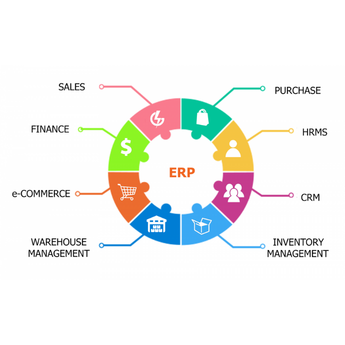
A modern enterprise platform can include a wide range of integrated modules, such as:
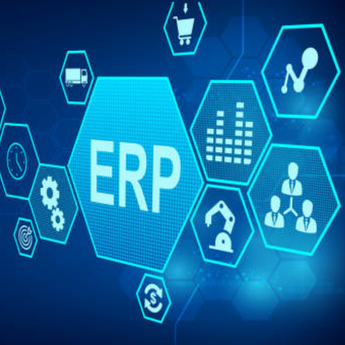
- Enterprise Resource Planning (ERP)
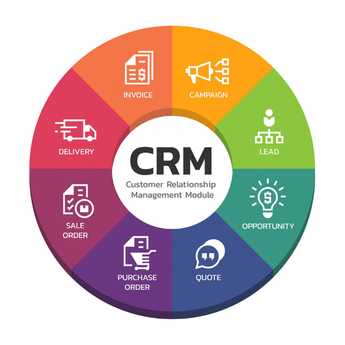
- Customer Relationship Management (CRM)
- Human Resource Management (HRM)
- Accounting & Finance
- Inventory & Warehouse Management
- Manufacturing & Production
- Procurement & Purchase Management
- Sales & Distribution
- Payroll Management
- Asset Management
- Business Intelligence & Reporting
- Document Management
These modules work together seamlessly, ensuring data flows across departments without duplication or manual intervention.
Benefits of Enterprise Solutions
Increased Productivity
Automation reduces repetitive tasks, allowing employees to focus on higher-value activities and improving overall efficiency.
Real-Time Business Insights
Interactive dashboards and reports provide instant access to key performance indicators, helping management make faster and smarter decisions.
Better Collaboration
Departments operate on the same platform, improving communication and ensuring everyone works with accurate, up-to-date information.
Improved Accuracy
Automated workflows minimise human errors in payroll, inventory, accounting, and operational processes.
Enhanced Customer Experience
Integrated customer information enables faster service, better communication, and stronger long-term relationships.
Scalable Growth
Enterprise solutions are designed to grow alongside your business, supporting new branches, users, products, and operational requirements.
Stronger Security
Role-based access controls, audit trails, encrypted data, and automated backups help protect valuable business information.
Industries That Benefit
Enterprise solutions can be customised for businesses across various industries, including:
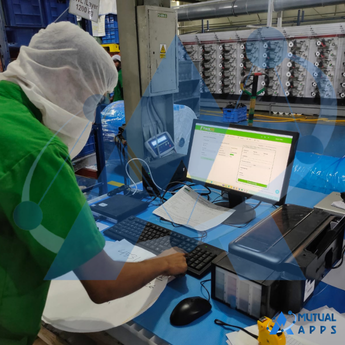
- Manufacturing
- Tea Estates & Agriculture
- Trading & Distribution
- Retail & Wholesale
- Healthcare
- Education
- Logistics & Transportation
- Construction
- Hospitality
- Financial Services
- Pharmaceuticals
- Corporate Enterprises
Every organisation has unique workflows, and enterprise solutions can be tailored to meet industry-specific requirements.
The Digital Transformation Journey
Implementing an enterprise solution is more than installing software—it’s a strategic transformation. The process typically includes:
- Business process analysis
- Requirement gathering
- Solution design
- Custom software development
- System integration
- User training
- Deployment
- Ongoing support and continuous improvement
A successful implementation ensures technology aligns with business goals while maximising return on investment.
Choosing the Right Technology Partner
Selecting the right enterprise solution provider is just as important as choosing the software itself. An experienced technology partner understands your business processes, recommends best practices, customises the platform to your needs, and provides long-term support to ensure continued success.
The Future of Enterprise Solutions
Emerging technologies such as Artificial Intelligence (AI), Machine Learning, cloud computing, mobile applications, IoT, and advanced analytics are reshaping enterprise software. Businesses that embrace these innovations gain greater agility, improved operational efficiency, and a stronger competitive advantage.
Conclusion
Enterprise solutions are no longer a luxury—they are a necessity for organisations aiming to grow, innovate, and compete in today’s digital economy. By integrating business processes into one intelligent platform, organisations can streamline operations, improve decision-making, reduce costs, and deliver exceptional value to customers.
Whether you’re a growing business or an established enterprise, investing in the right enterprise solution is an investment in long-term efficiency, productivity, and sustainable success.